Mastering First and Second Touch for Outside Defenders
This article documents the training or athlete-development topic shown below as part of Alexis Burmeister's published soccer updates.
A complete training resource for outside defenders who need cleaner receiving, faster decisions, and more confidence under pressure. The first touch creates the next action. The second touch uses it.
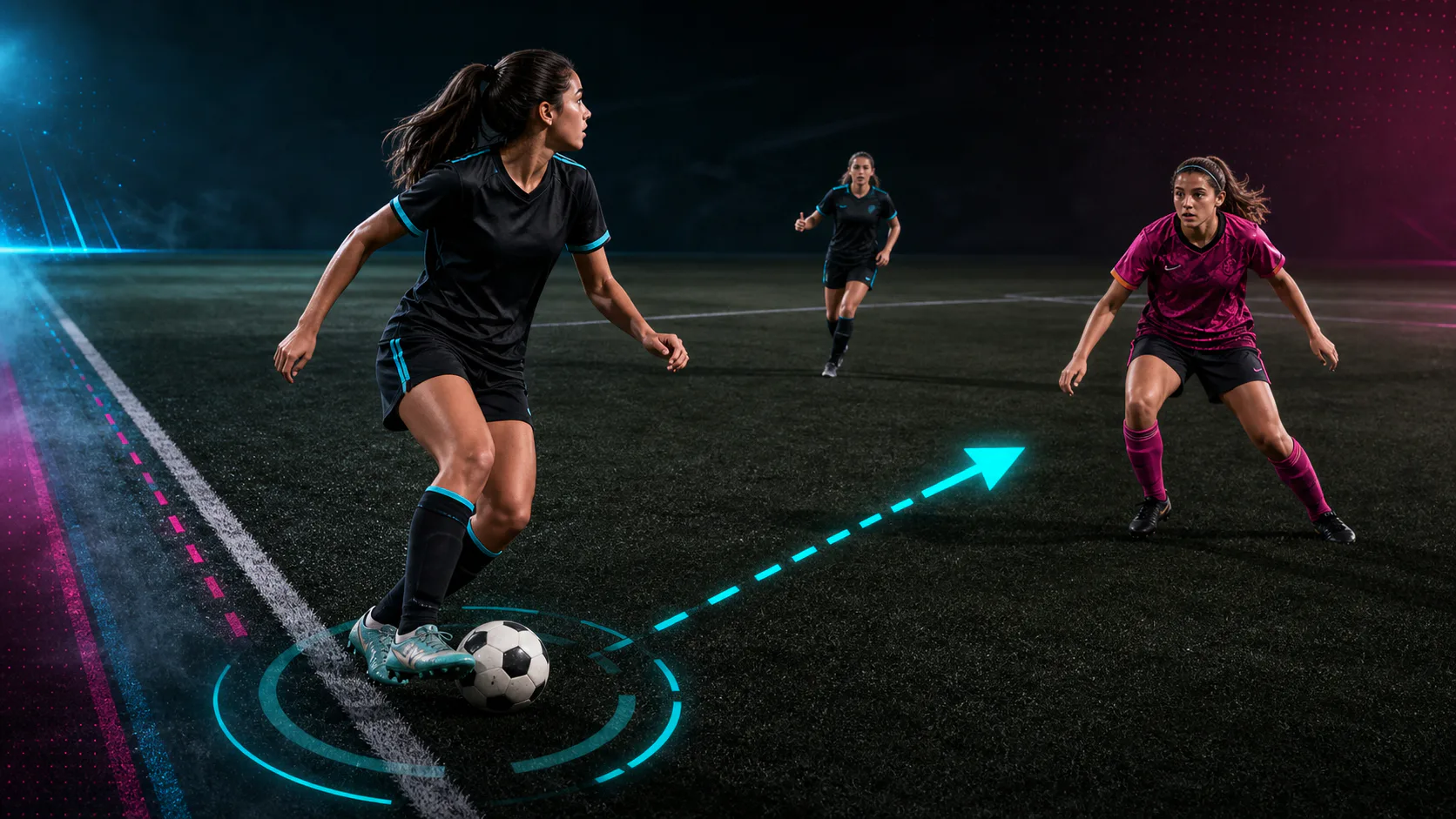
The first touch creates the next action
For an outside defender, receiving is rarely neutral. The ball often arrives near the touchline, where space is limited and pressure can arrive quickly from the opponent winger, forward, or central midfielder. A good first touch does more than stop the ball. It moves the ball into a better picture.
A poor first touch creates pressure. A clean first touch creates options. A purposeful second touch keeps the game moving. This guide turns those ideas into a repeatable training system for players, parents, and coaches.
Outside defenders need technical security in tight, wide spaces
The sideline is an extra defender
There is less room to recover from a heavy touch, so first-touch direction matters immediately. The touchline can help protect the ball, but it can also trap the player if the first touch goes toward pressure.
The player must see multiple options
The center back, goalkeeper, defensive midfielder, winger, and space down the line can all be relevant before the ball arrives. The player should receive with enough information to choose between safe support and progressive play.
The role now starts attacks
The modern full-back or outside defender defends wide areas and supports attacks through overlaps, underlaps, switches, crosses, and wide combinations. First and second touch quality is what lets that role connect defense to attack.
Scan, shape, first touch, second touch
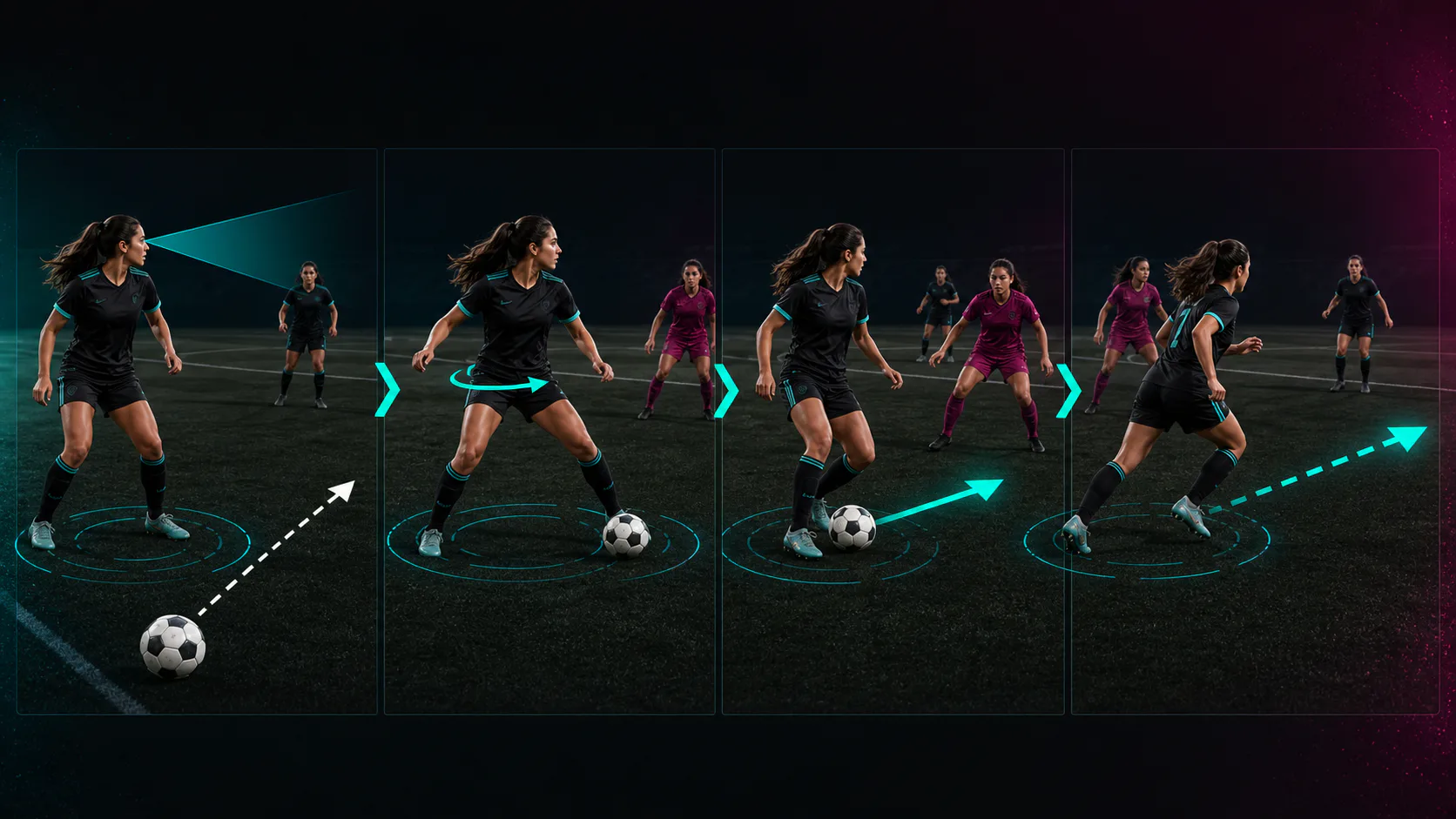
1. Scan
Gather information before the ball arrives. Check the ball, opposition, teammates, and space. The BOTS scan cue keeps it simple: ball, opposition, teammates, and space.
2. Shape
Open the hips, set the feet, and prepare the receiving surface so the next action is possible. Open body shape gives the outside defender more options than square receiving.
3. Touch and connect
Move the first touch away from pressure, then use the second touch to pass, carry, protect, cross, or reset. The second action should be planned before the first touch finishes.
Great touches start before the ball arrives
- Scan early and often. The player should not be surprised by pressure. The goal is to know the best safe and progressive option before receiving.
- Receive with an open body when possible. Half-turned receiving lets the player see the field and play forward. Closed body shape often forces the player backward.
- Use the correct surface. Inside of foot gives secure control, outside of foot helps escape, sole helps protect or drag, laces push forward, and thigh or chest control aerial balls when appropriate.
- Match touch weight to pressure. A two-yard touch may be perfect in tight space. An eight-yard touch may be perfect when bursting into open space.
- Keep the ball moving unless the game demands a stop. Killing the ball can help when shielding, but most receiving moments should set up the next action.
Teach a menu of touches, not one generic first touch
The best first touch depends on pressure, space, support, and the next action. Outside defenders should practice these options on both sides of the field and with both feet.
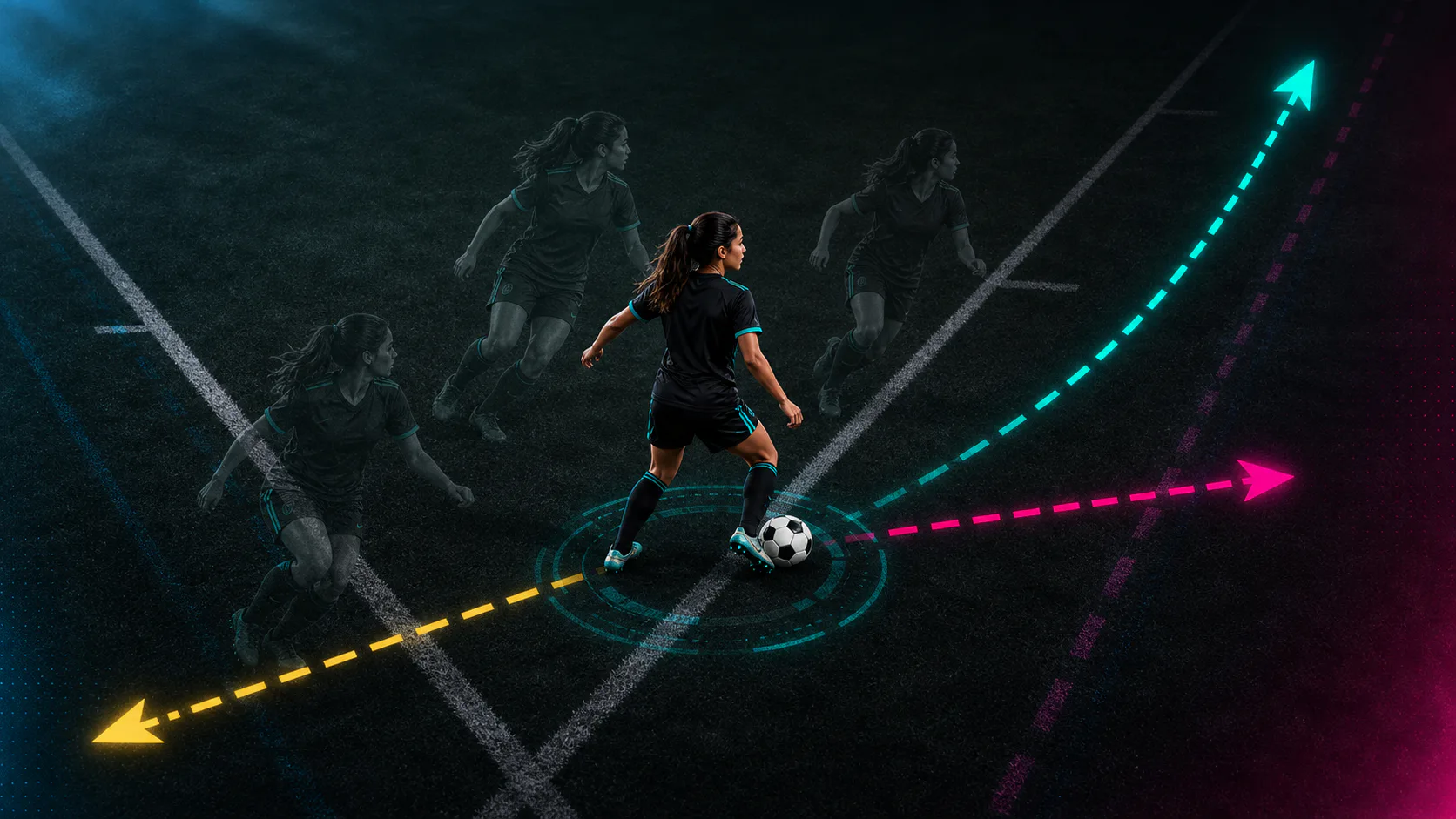
| Touch option | When to use it | First touch goal | Second touch goal |
|---|---|---|---|
| Down the line | The winger is available or the space behind the opponent is open. | Push forward along the touchline, outside of the pressing lane. | Pass to winger, carry, or play a wall pass. |
| Inside across the body | Pressure comes from outside or the defensive midfielder is free. | Let the ball travel to the far foot and enter central space. | Play into the 6/8, switch angle, or drive forward. |
| Back/diagonal reset | Pressure is tight and forward options are covered. | Move away from pressure, not toward the touchline trap. | Play center back, goalkeeper, or a diagonal supporting player. |
| First-time pass | The pass quality is clean and a teammate is clearly open. | Skip control when safe. | One-touch bounce, wall pass, or switch. |
| Protect and shield | Pressure arrives before a clean forward option appears. | Get body between opponent and ball. | Win time, draw contact, or connect with support. |
Make the second touch a decision
The second touch should not be automatic. It should answer the game: pass if support is open, carry if space appears, protect if pressure wins, cross if the line opens, or reset if the team needs control.
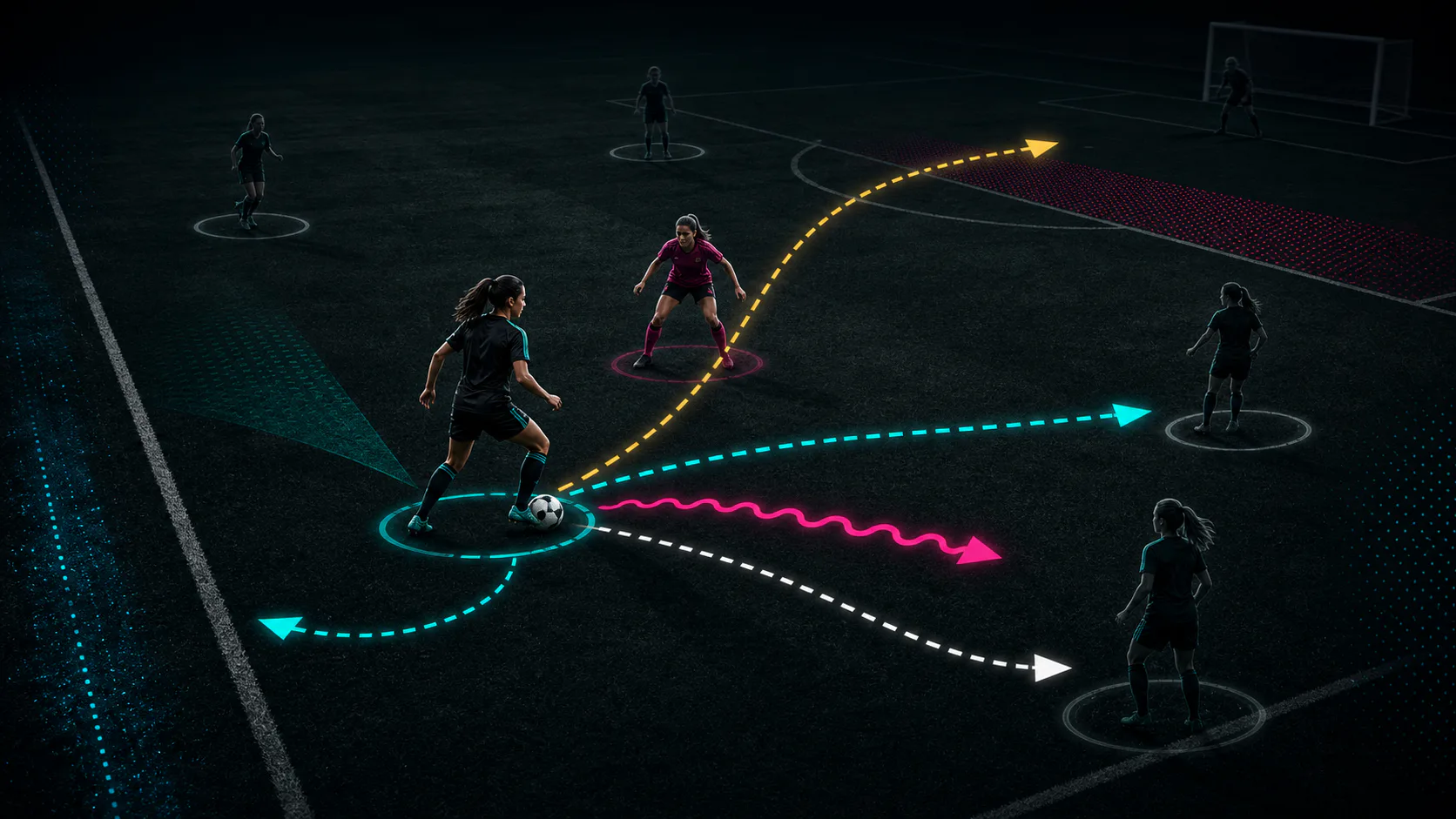
Simple decision rules
- If pressure is outside and inside support is free, receive across the body and play inside.
- If pressure is inside and the line is free, take the first touch down the line.
- If pressure is tight and the next pass is not clear, protect or reset quickly.
- If the pass quality is clean and a teammate is clearly open, one touch may be better than two.
- If the touch creates an attacking lane, the second touch should use that lane before it closes.
- If the ball is bouncing or awkward, secure the first touch before forcing the second touch.
Train the touches that show up in games
| Scenario | Starting picture | First-touch goal | Second-touch options |
|---|---|---|---|
| Build-out from goalkeeper or center back | Outside defender is wide, center back has the ball, opponent winger is ready to press. | Receive open enough to see inside support and the line. | Pass inside to the 6/8, play winger, reset to center back, or carry if pressure is late. |
| Touchline high press | Ball arrives near the sideline and pressure closes fast. | Do not trap yourself on the line. Touch away from the opponent or shield. | Bounce to center back, play inside, win a foul, or release down the line. |
| Receiving a switch of play | Ball travels across the field and the outside defender has time to prepare. | Get in line early, cushion the ball, and face forward. | Drive into space, play winger, combine inside, or cross if in the attacking third. |
| Overlap or underlap with winger | Outside defender has connected with the winger and moves beyond or inside. | Receive the return pass into crossing, cutback, or combination space. | Cross, cut back, pass inside, or drive at the box. |
| Winning the ball and transitioning | Outside defender tackles, intercepts, or collects a loose ball. | Secure the ball and escape immediate counter-pressure. | Connect safely, play forward early, or carry into open space. |
| Under pressure after a mistake | A heavy touch or awkward pass creates danger near the sideline. | Recover composure and protect the ball. | Simple reset, shield, clear only when needed, or play into a support angle. |
Move from clean technique to game-like pressure
The goal is not to complete a drill once. The goal is to repeat quality actions until scanning, touch direction, and second-touch decisions become habits.
Wide Channel Touch Pattern
Purpose
Build receiving habits for a touchline player under realistic pressure.
Setup
Mark a 12 by 18 yard wide channel with a passer, an outside defender, a target, and a passive defender.
Reps
4 rounds of 90 seconds with 60 seconds rest
- Check both shoulders before the pass travels.
- Receive across the body when the inside lane is open.
- Use the touchline as a cue, not a trap.
- Name the second action before taking it.
Progression: Make the defender live and add an overlapping teammate.
Regression: Remove the defender and rehearse body shape at slower speed.
Wall pass two-touch ladder
Purpose
Clean contact, touch weight, and two-touch rhythm.
Setup
Use a wall or rebounder and mark a receiving lane. Alternate feet every 10 passes.
Reps
3 rounds of 3 minutes
- First touch out of feet.
- Second touch passes with the correct weight.
- Keep scanning habits even without a defender.
Progression: Add angle, weaker foot, one-touch reps, or a sprint after the pass.
Regression: Start closer to the wall and slow the pass speed.
Four-gate first touch
Purpose
First-touch direction and reacting to a cue.
Setup
Set four gates. The server calls a gate as the ball travels. Receiver touches through the gate and returns the pass.
Reps
4 sets of 8 to 10 reps
- React after the cue, not before.
- Touch through the gate with a playable next step.
- Use both feet and both sides.
Progression: Add defender shadow, shrink gates, or call the color late.
Regression: Use two gates and call earlier.
Receive across the body
Purpose
Far-foot receiving and inside connection.
Setup
Three-player angle: passer to outside defender to target.
Reps
3 sets of 8 reps each side
- Let the ball travel to the back foot.
- Open the hips before the pass arrives.
- Connect inside with the second touch.
Progression: Add pressure from the outside shoulder and limit to two touches.
Regression: Remove pressure and pause after the first touch.
Pressure shadow
Purpose
Escaping pressure without turning every repetition into a tackle.
Setup
Server passes, defender presses after the pass, receiver takes touch away and connects.
Reps
4 rounds of 60 to 90 seconds
- Find pressure before the ball arrives.
- Touch away from the pressing path.
- Protect if the pass is not available.
Progression: Progress from passive to delayed to live after first touch, then full live.
Regression: Keep defender passive and give extra space.
Outside-back rondo channel
Purpose
Receiving wide, connecting inside, and supporting at a good angle.
Setup
Build a rondo with a wide outside-back channel.
Reps
4 rounds of 2 minutes
- Stay wide enough to stretch pressure.
- Support after passing.
- Scan the inside target before receiving.
Progression: Add one-touch bonus, switch target, or transition goal.
Regression: Use an overload and a larger channel.
Overlap and underlap pattern
Purpose
Combining with the winger, receiving on the move, and crossing or cutting back.
Setup
Pass to winger, move beyond or inside, receive return, then play final action.
Reps
3 sets of 6 reps each side
- Time the run so the return pass is playable.
- First touch should set cross, cutback, or pass inside.
- Do not overrun the ball.
Progression: Add defender, weak-foot finish, or decision cue.
Regression: Walk the movement pattern before adding pace.
Switch, cushion, drive
Purpose
Receiving longer passes and attacking space with the second touch.
Setup
Receive a switch, cushion the first touch, and drive into space.
Reps
3 sets of 6 reps each side
- Get in line with the flight early.
- Cushion the touch into space.
- Drive after the second touch if pressure is late.
Progression: Add scanning call, defender recovery run, or final pass/cross.
Regression: Use a shorter diagonal pass.
Wide-channel first-touch game
Purpose
Transfer technical habits into decision-making.
Setup
Play a small-sided game with wide channels that reward receiving and connecting in two touches.
Reps
3 games of 4 minutes
- Reward scans before receiving.
- Reward breaking pressure with the first two touches.
- Keep decisions game-real, not drill-perfect.
Progression: Add points for breaking pressure, switching play, or connecting after a scan.
Regression: Give the wide player one extra support option.
| Variable | Easier | Harder |
|---|---|---|
| Space | Bigger area, wider gates, more passing lanes. | Smaller area, narrower gates, touchline trap. |
| Pressure | No defender or passive defender. | Delayed press, live defender, two defenders. |
| Time | Receiver can take an extra touch. | Two-touch limit, one-touch bonus, time limit. |
| Ball speed | Slow, accurate serves. | Firmer passes, bouncing passes, aerial balls when age-appropriate. |
| Decision load | One known target. | Multiple targets, late cue, defender chooses pressure angle. |
| Fatigue | Full rest between reps. | Short recovery, sprint before receiving, game-like transition. |
Short, repeated sessions beat one long unfocused session
Use this as a repeatable block. Two short technical sessions per week plus one game-like session is enough to build habits without overloading the player.
| Week | Main theme | Technical focus | Game-like focus | Measurement |
|---|---|---|---|---|
| 1 | Scan and body shape | Wall pass, open hips, receive on back foot. | Unopposed build-out pattern. | 80% of reps show a scan before receiving. |
| 2 | First-touch direction | Down line, inside, back/diagonal touches. | Four-gate and angle receive. | First touch leaves ball playable in 8 of 10 reps. |
| 3 | Second-touch quality | Pass weight after touch, two-touch rhythm. | Connect to winger, 6/8, or center back under time limit. | Second touch reaches target in 7 of 10 reps. |
| 4 | Pressure receiving | Shielding, far-foot receiving, escape touch. | Pressure shadow and rondo channel. | Retain or progress under pressure 6 of 10 reps. |
| 5 | Outside-back patterns | Switch receive, overlap, underlap, cutback. | Wide-channel game and final-third patterns. | Choose the correct option in 6 of 10 scenarios. |
| 6 | Game transfer | Review weakest two touches from match notes. | Full-speed scenarios and small-sided games. | Self-score and coach review after play. |
20-minute individual session
- 3 minutes: dynamic warm-up with ball touches.
- 5 minutes: wall pass two-touch ladder.
- 5 minutes: four-gate first touch or cone targets.
- 5 minutes: pressure shadow or receive across body.
- 2 minutes: scorecard reflection.
45-minute partner session
- 5 minutes: warm-up passing and scanning callouts.
- 10 minutes: receive across body.
- 10 minutes: four-gate first touch with late call.
- 10 minutes: pressure shadow progression.
- 7 minutes: outside-back scenario reps.
- 3 minutes: review and game-day cue.
60-minute team session
- 10 minutes: technical activation.
- 12 minutes: outside-back channel rondo.
- 12 minutes: switch, cushion, drive.
- 12 minutes: overlap/underlap with defender.
- 12 minutes: wide-channel first-touch game.
- 2 minutes: team reflection.
Measure behaviors that predict better game touches
| Score | Meaning | Example |
|---|---|---|
| 2 | Excellent rep. | Scanned early, touched away from pressure, connected or progressed with second touch. |
| 1 | Controlled but incomplete. | Kept the ball but needed extra touches, missed the best option, or pass was weak. |
| 0 | Turnover or poor habit. | No scan, first touch into pressure, ball stuck under feet, or second touch lost possession. |
Match observation checklist
- When I received from the back line, did I scan before the ball arrived?
- Which option did I choose most: line, inside, reset, or carry?
- Did my first touch make the second touch easier?
- Did I lose the ball because of technique, pressure, or decision-making?
- Did I ask for the ball again after a mistake?
- Which touch should be the focus of the next training session?
Fix the habit, not just the error
| Mistake | Why it happens | Correction cue | Best drill |
|---|---|---|---|
| Ball stuck under feet | Player receives flat or too close to body. | Touch out of feet; make the second touch easy. | Wall pass ladder. |
| Touch into pressure | No scan or late scan. | Find the opponent before the ball arrives. | Pressure shadow. |
| Closed body shape | Player faces only the passer. | Show the passer your back foot and see inside. | Receive across the body. |
| Second-touch panic | First touch had no plan. | Know pass, carry, protect, or reset before controlling. | Decision-tree scenarios. |
| Heavy touch down the line | Player assumes forward is always best. | Forward only if forward is open. | Four-gate first touch. |
| Avoiding the weaker foot | Confidence gap. | Every drill has a left and right version. | Wall pass and gate work. |
Coaching references
This guide adapts ideas from coaching references into a generic training plan for outside defenders. The diagrams from the HTML reference have been replaced by generated public artwork and structured text.
- England Football Learning - receiving in football: possession, connection, and keeping the ball.
- England Football Learning - receiving under pressure: scanning, receiving surfaces, moving the ball, protecting it, and shielding.
- England Football Learning - the lions den: BOTS scanning cue for ball, opposition, teammates, and space.
- England Football Learning - passing and receiving to score: positive first touch, scanning, positioning, pass weight, and keeping the ball moving.
- Coaches Voice - the modern full-back: defending wide areas, supporting attacks, overlapping, underlapping, crossing, switching, and wide positioning.
- England Football Learning - playing out to attack: confidence on the ball under pressure, passing and receiving, and combination play.
- Soccer Coach Weekly and SoccerDrive first-touch resources: practical first-touch variations after the player learns the core principles.
- U.S. Youth Soccer coaching manual: developmentally appropriate training environments.